
BJERKE / DSGN
Senior Design Lead · IBM
Challenge
The Problem
What we were solving
Three real problems collided at once: there were no established industry patterns for AI agent building — the category didn't exist yet. Users didn't know what they wanted to do with the technology. And the team was replacing a previous AI Assistant Builder, so there was inherited baggage to clear out or work around.
Design goal
Define the design language for a brand-new product category — a low-code AI agent builder that empowers business users to build and deploy AI agents without engineering expertise, while giving IBM a credible market position in the rapidly evolving AI automation space.
Constraints
- ·
No established industry patterns to reference — the category didn't exist yet
- ·
Users couldn't articulate what they wanted from the technology
- ·
Previous AI Assistant Builder created inherited UX debt to clear
- ·
Tight timeline tied to THINK 2025 CEO keynote demos
- ·
Must support both technical and non-technical user personas
How we learned
Research
Findings
Research revealed no mature patterns existed to borrow from — every competitor was figuring out the same problem. Early user testing exposed a critical issue with the inherited instruction structure: splitting agent setup into four fields (role, goal, backstory, instructions) caused confusion because users couldn't distinguish role from goal, didn't understand why an agent needed a backstory, and — critically — all four fields were just concatenated into the same prompt anyway. The team collapsed it back to a single instructions field.
Methods
- 1.
Competitive analysis of emerging AI agent platforms
- 2.
Stakeholder interviews across PM, engineering, and offering management
- 3.
Usability testing with business users and developers
- 4.
In-person demos and feedback sessions at THINK 2025
- 5.
Continuous feedback loops with PM and engineering
The role/goal/backstory/instructions split caused consistent confusion in testing. Users couldn't tell role from goal — and technically all three were just concatenated into instructions anyway. Collapsing to a single field was a first-principles call, not a simplification compromise.
— Usability Testing
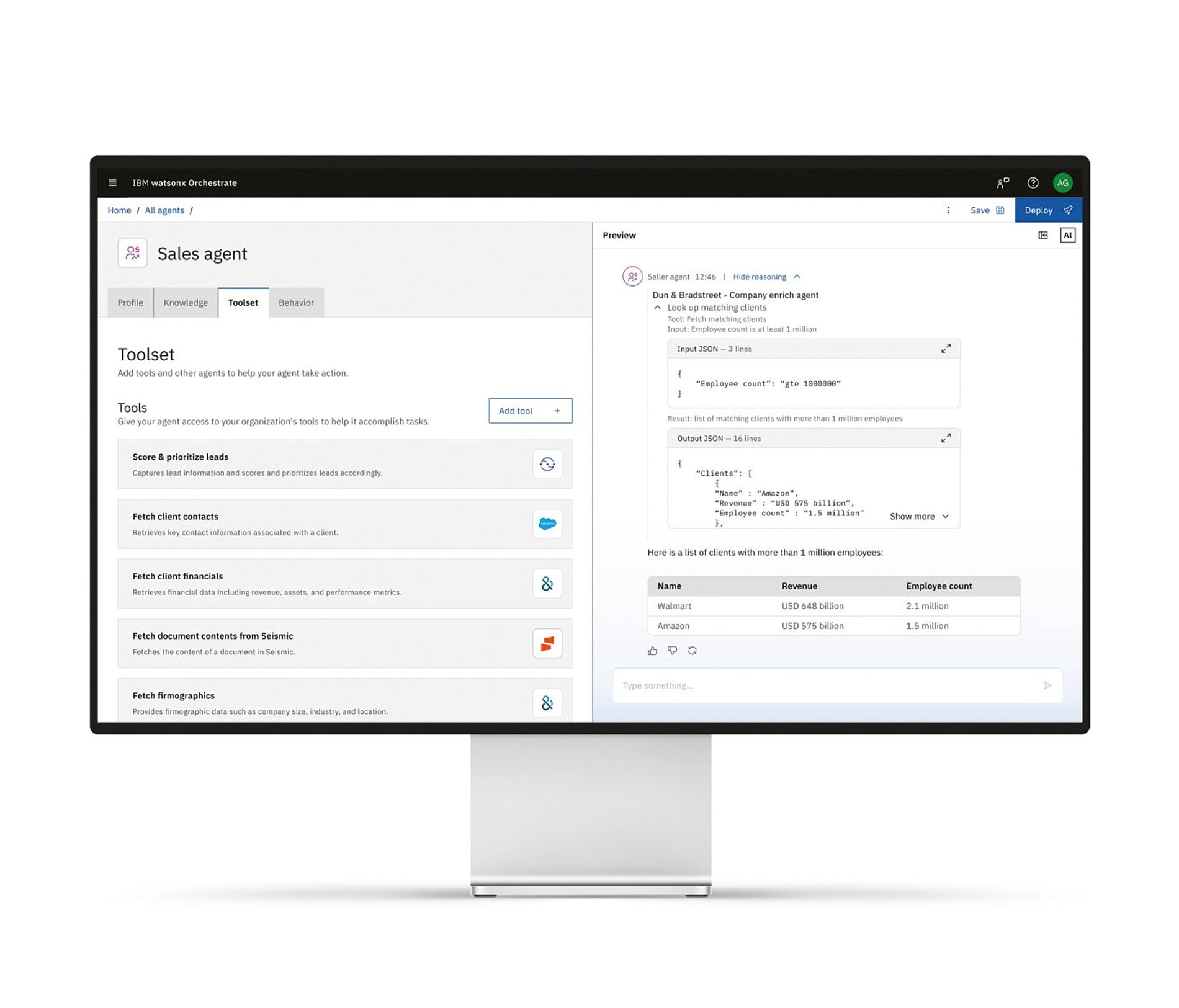
Making the live chat preview load-bearing — 40% of the canvas — changed how users engaged with the builder. Instead of configuring then testing, they iterated in real time. The preview wasn't a feature; it was the design philosophy.
— Prototype Testing
This team's dedicated execution has set a new benchmark, enabling wxO to achieve 96% of its revenue target with a large part due to this pivot in our strategy.
IBM ENTREPRENEUR Award Nomination
How we worked
Process
Category Definition · 4 weeks
Mapped the competitive landscape, identified that no mature patterns existed, and established the preview-forward design direction — optimizing for iteration speed rather than trying to define the right configuration upfront.
Concept & Early Prototyping · 6 weeks
Created early low/mid-fi designs that secured executive buy-in. Tested multiple interaction models for the agent builder flow, including the role/goal/backstory experiment — which user testing quickly invalidated.
Agile Pivots & Refinement · 8 weeks
Navigated a mid-cycle strategic pivot toward agentic AI. Scoped and prioritized all design work across a 5-person team, making deliberate tradeoffs — deferring the canvas/visualization experience and chat-based building to maintain launch quality.
THINK 2025 CEO Keynote · 2 weeks
Delivered polished Figma prototypes for high-stakes in-person demos at IBM THINK 2025 — featured in the CEO keynote. Executive and customer response validated the design direction and drove significant investment interest.
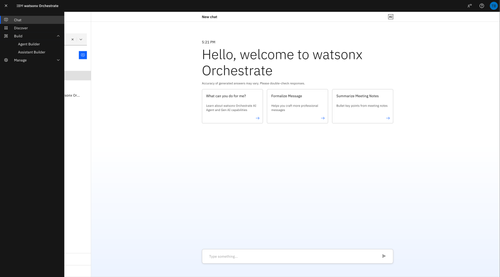
Agent Builder — Overview
Impact
Outcomes
Summary
IBM's internal AskHR agent, built on Agent Builder, resolved 100,000+ employee inquiries in its first year. Agents go live 25% faster than comparable RPA solutions. The ENTREPRENEUR Award nomination cited the design-led pivot as a direct driver of 96% annual revenue target achievement — a rare instance of design work tied directly to a business outcome.
AskHR — employee inquiries resolved in year one
Time-to-launch vs. RPA solutions
Revenue impact
Industry Recognition
This team's dedicated execution has set a new benchmark, enabling wxO to achieve 96% of its revenue target with a large part due to this pivot in our strategy.
IBM ENTREPRENEUR Award Nomination